
Preventive, Predictive or Condition-Based Maintenance for Generators and Critical Sites
Preventive maintenance works on a calendar or run hours, condition-based maintenance acts when a measured value crosses a threshold, and predictive maintenance forecasts failure from trends. For generators, UPS batteries and cooling, keep the time-based minimum that standards and manufacturers require, add condition-based triggers from monitoring and readings, and use prediction only where there is enough data.
In this article
- What are the four maintenance strategies?
- How do they compare?
- What does this look like on a standby generator?
- What about UPS systems and batteries?
- And cooling equipment?
- Why is fully predictive maintenance hard for standby equipment?
- What is a practical maturity path?
- Where does the data come from?
- What are the common pitfalls?
- Frequently asked questions
- Sources
Every maintenance manager hears the same pitch: stop servicing on a calendar, start predicting failures. For a production line that runs every day, that often holds. For a standby generator that runs half an hour a month, a UPS battery that floats for years or a cabinet air conditioner on a remote site, the picture is different.
This article explains the four strategies, shows what each looks like on critical site equipment and sets out a practical path that does not drop the intervals standards and manufacturers still require.
What are the four maintenance strategies?
- Reactive maintenance (run to failure): nothing is done until the equipment fails. Fine for cheap, non-critical items with a spare on the shelf, not for anything that keeps a site running during a power cut.
- Preventive maintenance (time or usage based): work is done at fixed intervals, by calendar (every month, every year) or by usage (for example every 250 run hours or once a year, whichever comes first). The trigger is the clock or the hour meter, not the state of the equipment.
- Condition-based maintenance: work is triggered when a measured condition crosses a threshold. Examples: a battery block voltage drifting away from the string average, coolant temperature higher than usual for the same load, a rising differential pressure across a filter, or an oil analysis result outside limits.
- Predictive maintenance: trends and models are used to forecast when a component will fail, so the work is planned before the threshold is reached. It needs a long, clean history and enough comparable failures to learn from.
ISO 17359, the general guideline for condition monitoring and diagnostics of machines, describes the same logic as a procedure: choose the equipment and the failure modes that matter, choose what to measure, set alert criteria, diagnose, estimate the remaining life where possible, decide the action and review the results.
How do they compare?
| Reactive | Preventive | Condition-based | Predictive | |
|---|---|---|---|---|
| Trigger | Failure | Calendar or run hours | Measured value crosses a threshold | Forecast from trends and models |
| Data needed | None | Asset list, intervals, run hours | Regular readings or monitoring, baselines, thresholds | Long history, many assets, failure records |
| Running cost | Low until something fails | Predictable, some work done too early | Lower per asset, needs data discipline | Highest setup effort, analytics and review |
| Risk | Highest: failure finds you | Misses failures between intervals | Misses failures nobody measures | Wrong forecasts if data is thin |
| Best for | Cheap, non-critical items | Statutory checks, consumables, ageing parts | Batteries, filters, temperatures, fluids | Assets that run often and fail in measurable ways |
In practice the strategies are layers, not rivals: a well run critical site uses each where it fits.
What does this look like on a standby generator?
A standby generator is the classic case for a mixed approach.
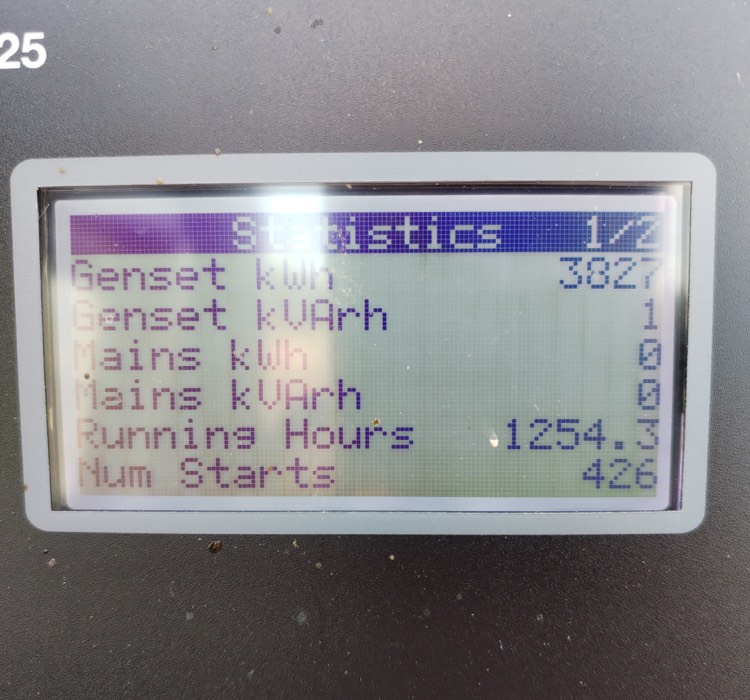
- Run hours plus calendar for oil and filters. Manufacturers specify service intervals in hours and in months, whichever comes first. A standby unit rarely reaches the hours, so the calendar interval usually decides. Oil still ages, absorbs moisture and loses additives while the engine sits.
- Battery voltage trend. The starter battery is one of the most common reasons a standby generator fails to start. A weekly or remotely logged voltage, including the dip during cranking, shows a weakening battery long before a failed start.
- Load per test run, against wet stacking. A diesel engine run repeatedly at very light load does not reach operating temperature, and unburned fuel and soot collect in the exhaust. Logging the kW and duration of every test run turns this into a condition-based decision: if the site load is too low, schedule a load bank test.
- Fuel quality. Stored diesel degrades and collects water and microbial growth. Water in the tank, a fuel sample that fails a check or a filter that blocks early are conditions that trigger fuel polishing or replacement. See diesel fuel management for standby generators.
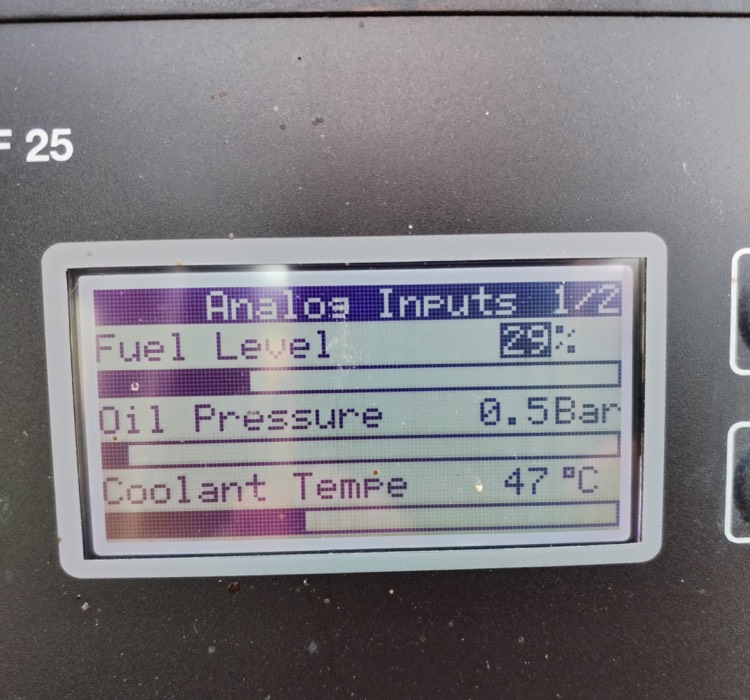
- Coolant temperature, oil pressure and fuel level from the controller. Compared with the same unit's earlier test runs, a change stands out even while the value is still inside the alarm limits.
None of this replaces the minimum tests in NFPA 110. Weekly inspections and monthly exercise under load stay in place regardless of what the data says. The full interval list is in this generator maintenance schedule and checklist.
What about UPS systems and batteries?
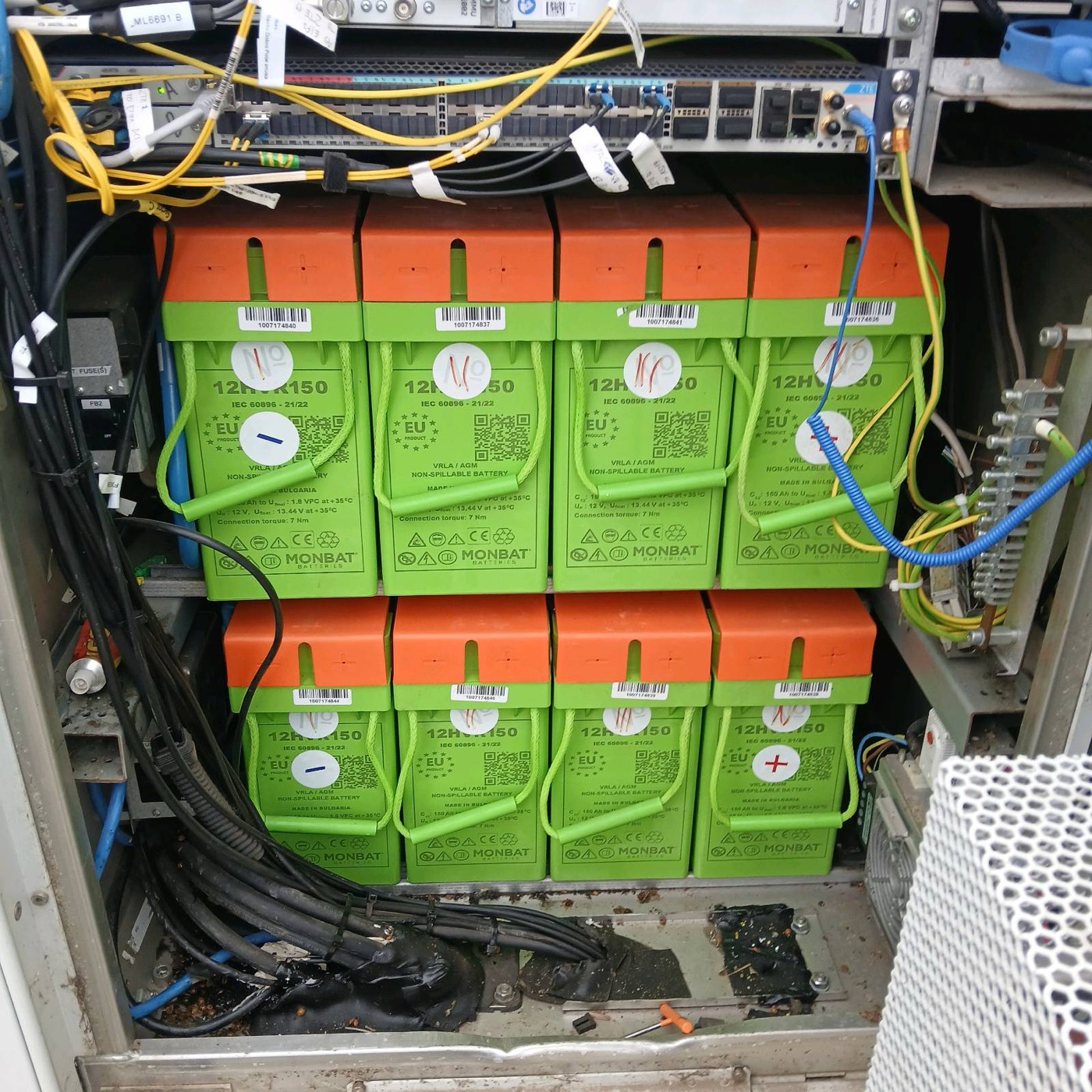
Valve-regulated lead-acid (VRLA) batteries in UPS systems and telecom power plants are where condition-based maintenance pays back most clearly. They fail gradually, and the warning signs can be measured.
- Block or cell voltages on float, recorded every visit or by monitoring. One block drifting away from the rest of the string is an early warning.
- Internal resistance or impedance trend against a baseline. IEEE 1188, the recommended practice for maintaining and testing VRLA batteries in stationary applications, recommends establishing baseline internal ohmic values and measuring them periodically, so that each block is compared with its own starting point and with the string. The absolute value means little on its own; the change from baseline is what counts.
- Temperature of the battery room or cabinet, because heat shortens VRLA life.
- Runtime or capacity test at the intervals the manufacturer and IEEE 1188 recommend, because it is the only test that proves the string can actually carry the load.
The replacement decision then rests on measured condition, not only on the age on the label.
And cooling equipment?
Air conditioners and precision cooling units give useful condition data with little extra effort:
- Filter condition: differential pressure where a sensor exists, otherwise a photo and a rating at each visit. Dusty sites need much shorter filter intervals than the calendar plan assumes.
- Temperature delta between return and supply air. A shrinking delta at the same load points to low refrigerant, a fouled coil or airflow problems.
- Compressor run time and starts. A unit that runs longer for the same heat load, or cycles more often, is losing capacity.
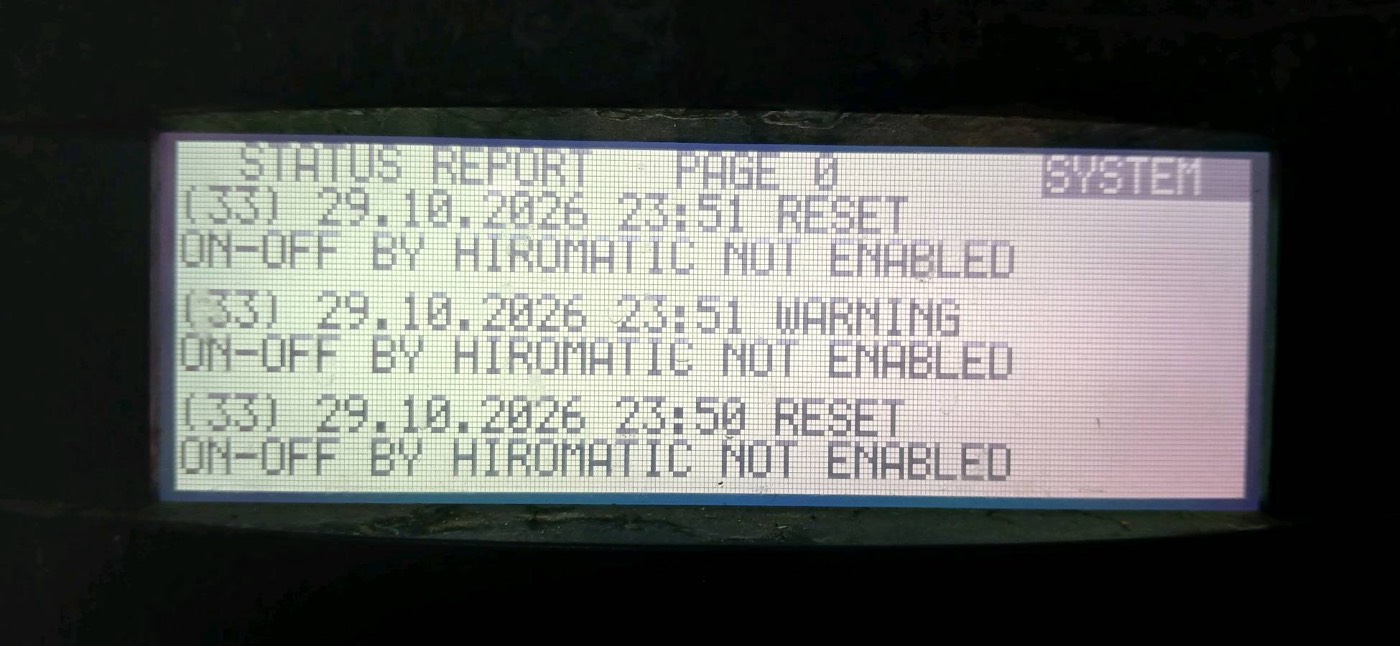
- Repeated alarms and resets in the unit's log. A warning that is reset every week is a condition, not noise.
Statutory leak checks for units with fluorinated gases stay on their legal schedule under the F-gas Regulation (EU) 2024/573, whatever the condition data shows.
Why is fully predictive maintenance hard for standby equipment?
Predictive models learn from operating data and past failures. Standby equipment offers little of either:
- Little operating data. A generator that runs 30 minutes a month produces a few hours of data a year. A battery on float produces almost none until there is an outage.
- Failures are often about age, environment and start-up. Dried seals, corroded terminals, rodent damage, a starter battery that gives up on a cold morning, a fuel filter blocked by contaminated diesel. Many of these do not show a long, smooth trend in operating data.
- The moment that matters is rare. The real test is the outage, and you cannot wait for outages to train a model.
That is why, for most standby fleets, condition-based maintenance is the realistic target, with prediction used selectively, for example forecasting battery replacement from internal resistance trends across a large fleet of similar strings.
What is a practical maturity path?
- Keep the time-based minimum. Statutory tests (such as NFPA 110 for emergency power), manufacturer service intervals and legal inspections stay in the plan. They are the floor, not the goal.
- Record readings, not ticks. Every preventive visit should capture measured values per asset: block voltages, internal resistance, run hours, coolant temperature, filter condition. This is the data that later makes condition-based work possible.
- Set baselines. Record values when equipment is new or freshly serviced, so thresholds are set against each asset's own starting point.
- Add condition-based triggers. Let monitoring data and technician readings raise work orders automatically when a value crosses a threshold or drifts from its baseline.
- Review intervals. Where years of data show a task always finds nothing, discuss a longer interval with the manufacturer or client; where it keeps finding problems, shorten it.
- Use prediction where the data supports it. Large fleets of similar assets with good histories are the place to start, not single standby units.
Where does the data come from?
| Source | Typical data | Notes |
|---|---|---|
| Generator controllers | Run hours, starts, oil pressure, coolant temperature, fuel level, battery voltage, load per run | Available remotely if the controller is connected |
| BMS or remote monitoring | Alarms, temperatures, mains status, UPS and rectifier status, block voltages where sensors exist | Continuous, but only what has sensors |
| Technician readings | Internal resistance, filter condition, photos, oil and fuel samples, leaks | The only source for many condition checks |
| Lab and test reports | Oil analysis, fuel analysis, capacity tests, load bank results | Should be linked to the asset, not filed as PDFs |
The value comes from putting these sources on one asset record, so an alarm, a reading and a test report are read together. That is the case for remote generator monitoring feeding into a single maintenance platform, and for real-time field data from every visit.
What are the common pitfalls?
- Dropping statutory intervals. Condition-based maintenance adds to the legal and manufacturer minimum; it does not replace it. Insurers, auditors and warranty terms will ask for the time-based records.
- Alarm thresholds without baselines. A generic limit for "high internal resistance" or "high temperature" fires too late on one asset and constantly on another. Thresholds should start from each asset's baseline.
- Data nobody reviews. Readings collected every month and never compared are paperwork, not maintenance. Someone must own the trends, and threshold crossings must create work orders, not emails.
- Too many alarms. If every small drift raises a ticket, people stop looking. Start with the failure modes that matter most: starter batteries, UPS batteries, fuel and filters.
- Buying prediction before basics. A predictive tool cannot fix missing asset records, inconsistent readings or checklists that only ask for ticks.
Frequently asked questions
What is the difference between preventive and predictive maintenance?
Preventive maintenance is done at fixed intervals of time or usage, such as every year or every 500 run hours. Predictive maintenance uses trends and models of measured data to forecast when a component will fail and plans the work just before that point.
What is condition-based maintenance?
Condition-based maintenance triggers work when a measured value crosses a threshold or drifts from its baseline, for example a battery block voltage falling away from the string, a rising filter differential pressure or an oil analysis result outside limits.
Can condition-based maintenance replace NFPA 110 generator tests?
No. NFPA 110 weekly inspections and monthly exercise under load remain required for emergency power systems. Condition data adds earlier warnings between those tests and helps decide extra work such as load bank testing or battery replacement.
How do you decide when to replace a VRLA battery?
Compare internal resistance or impedance with each block's baseline as IEEE 1188 recommends, watch float voltages and temperature, and confirm with a capacity or runtime test. Replace blocks or strings when the measured condition shows degradation, not only when they reach a certain age.
Is predictive maintenance worth it for standby generators?
Usually only in part. Standby units run too little to produce much operating data, and many failures come from age, environment and start-up. Condition-based triggers from controller data and technician readings deliver most of the benefit; prediction helps mainly across large fleets of similar assets.
Sources
- ISO 17359, Condition monitoring and diagnostics of machines: general guidelines.
- IEEE 1188, Recommended practice for maintenance, testing and replacement of valve-regulated lead-acid (VRLA) batteries for stationary applications.
- NFPA 110, Standard for emergency and standby power systems, for minimum inspection and testing requirements.
- Regulation (EU) 2024/573 on fluorinated greenhouse gases, for leak check obligations.
- Experience from running 24/7 maintenance operations across generators, UPS systems, cooling and telecom sites.
- Related reading: real-time field data, first-time fix rate and CMMS vs field service management.

Maintenance software built by people who run maintenance
Domar Labs builds the Care family: GenSetCare for generator fleets and AllSiteCare for critical sites and facilities, both shaped by 24/7 field operations.